

Weeds don’t take the fall off. After a hot summer and a little rain, crabgrass, spurge and friends are still hanging around Austin lawns and beds… and winter weeds are right behind them.
Weeds can also grow in your beds, especially if you’ve been irrigating properly or we’ve had a good amount of rain. Many weeds are built for our harsh Central Texas climate.
Before we go further into identifying and controlling your weeds, let’s define our terms.
What is a weed?
Simply put, a weed is any plant that is where you don’t want it. This could be in your front foundation bed or in the middle of your yard. I have even seen weeds growing in gutters (true story). I guess a bird pooped a seed up there???
Some plants are more obviously weeds – thorny or poisonous plants. Other plants are weeds because they don’t fit the “desired aesthetic” (think a dandelion in the middle of your perfect lawn).
Here are some of the most common weeds in Central Texas, and a primer on how to best deal with them…
1. Crabgrass (Digitaria spp.)
Crabgrass is an annual weed that grows in warm, sunny areas of your lawn. It has a spreading growth habit and can quickly take over large areas of your lawn. The leaves are light green and have a distinctive shape that looks like crab legs (thus the name). Look near the center of the plant and you’ll often see purple or pink tones. It is a very resilient weed and produces something like 150,000 seeds in its life, making it hard to eradicate.
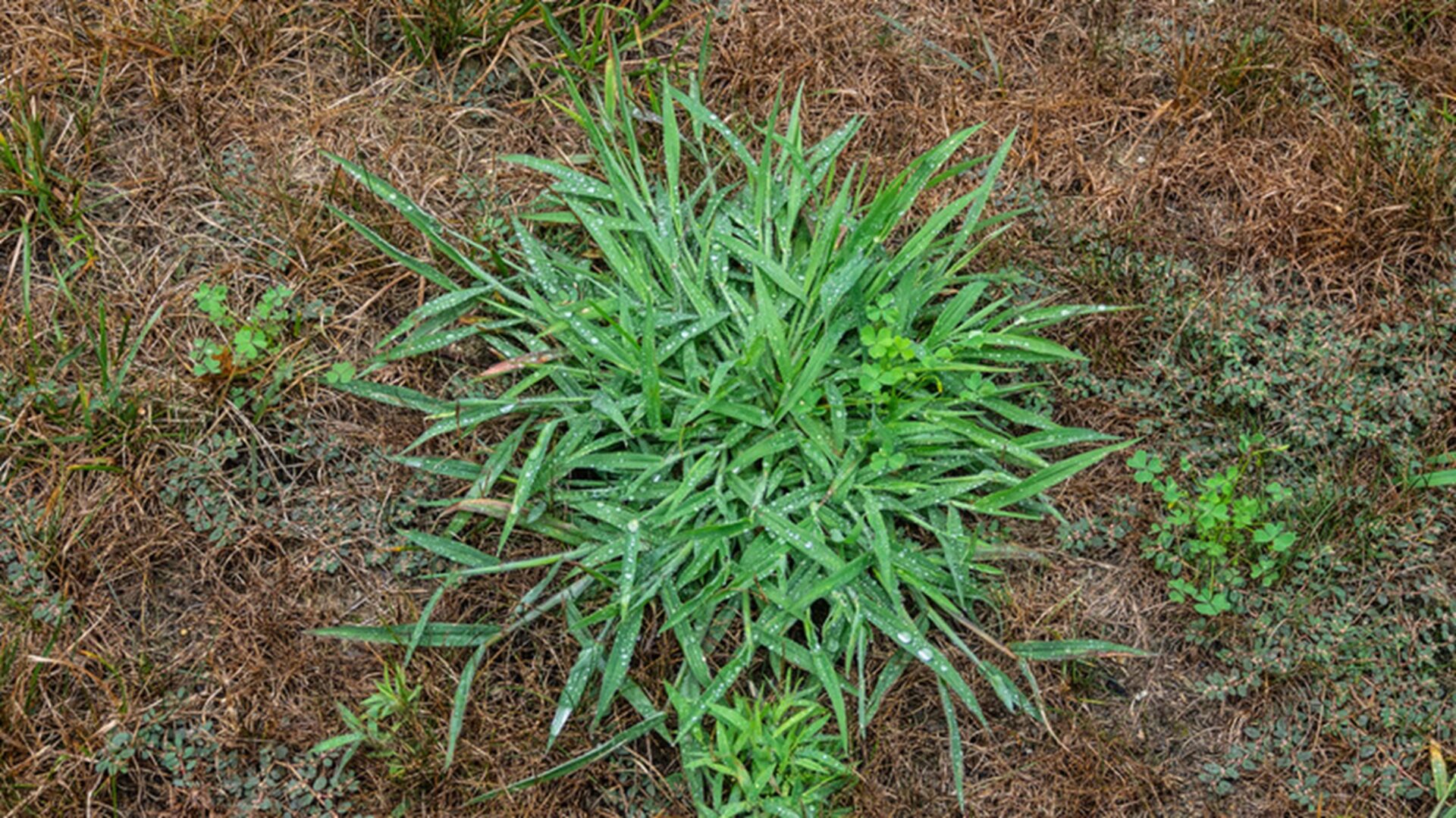
To control crabgrass in your lawn, you should apply a pre-emergent herbicide that prevents the seeds from germinating in late February through mid-April. You can also pull the plants by hand or use a post-emergent herbicide that targets the plant after it has started growing. Just be careful to use the proper chemicals so you do not damage the lawn.
To control crabgrass in your landscaping beds, we recommend pulling them by hand. It can be difficult to get all the roots so you will likely need to use a tool (like a shovel or a pick) – otherwise you will end up with the plant regrowing quickly.
2. Spotted Spurge (Euphorbia maculata)
Spurge is a low growing summer annual. It looks like a large weed because it covers a large area, but it only has one tap root, so it is super easy and satisfying to pull by hand. The leaves are oval shaped and small. This is one of the easier weeds to identify.
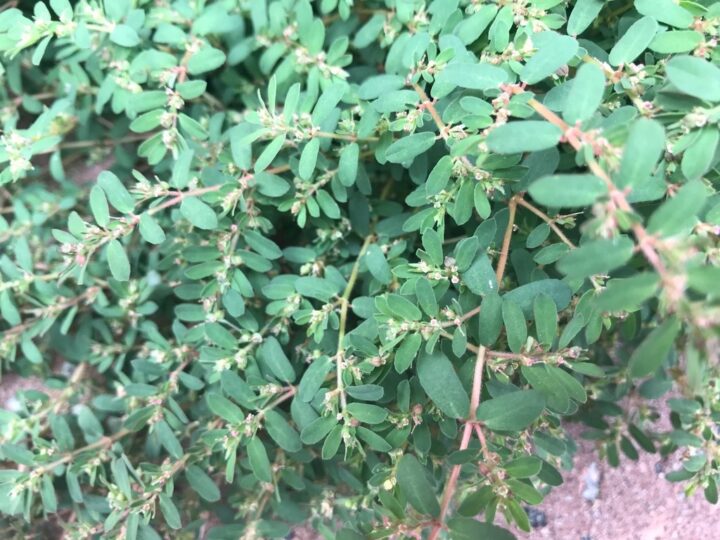
To control Spurge, we recommend hand pulling. It is an easy weed to pull and typically goes faster than expected. We recommend this for your beds and even your yard if you want to do it yourself. If you have a spurge infestation (a lot of them), then apply a broadleaf herbicide while the plant is actively growing (March-April and October-November).
3. Sandbur or Grassbur (Cenchrus spp.)
Sandburs are annual grass weeds known for their spiny seed heads AKA: Stickers or Stickerburrs. These things are the worst! They hurt and somehow find their way into every flip flop and onto every kids’ socks. Ouch!
They typically grow in dry, sandy, poor soils that are not maintained. They are a summer weed that starts to germinate in late April and will continue to germinate through the late summer.
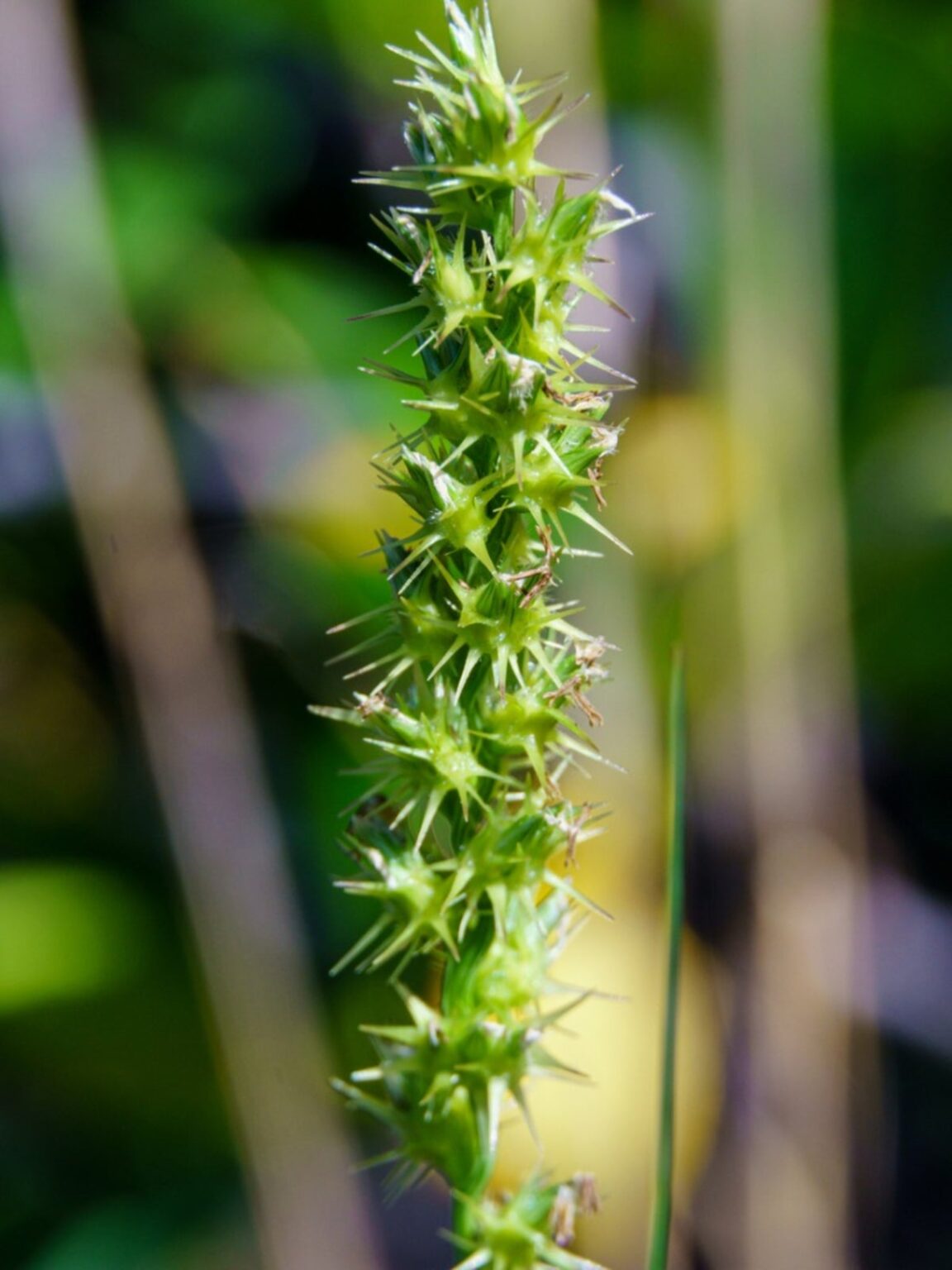
To control sandburs, the first priority is proper maintenance of the area. If your lawn has proper mowing, fertilization, and irrigation then you should be able to produce a lawn that is thick enough to choke out these weeds. Of course, if you still have them, then you can use herbicides to treat them. Pre-emergents should be used in mid to late spring (mid-March is a good time to start). Post emergent work best on young plants – as it matures it is much more difficult to control with post emergent.
4. Goosegrass (Eleusine indica)
Goosegrass is easily mistaken with crabgrass but the easiest way to distinguish between the two is the whiteish center coloring. This is how I remember: I have seen a white goose. I don’t think I have ever seen a white crab. As mentioned above, the crabgrass often has some purple or pink tones near the center. It does very well in heavily compacted areas so you will likely see it on the side of roads or paths. It doesn’t produce as many seeds as its lookalike (crabgrass) but can still produce up to 50,000 seeds.
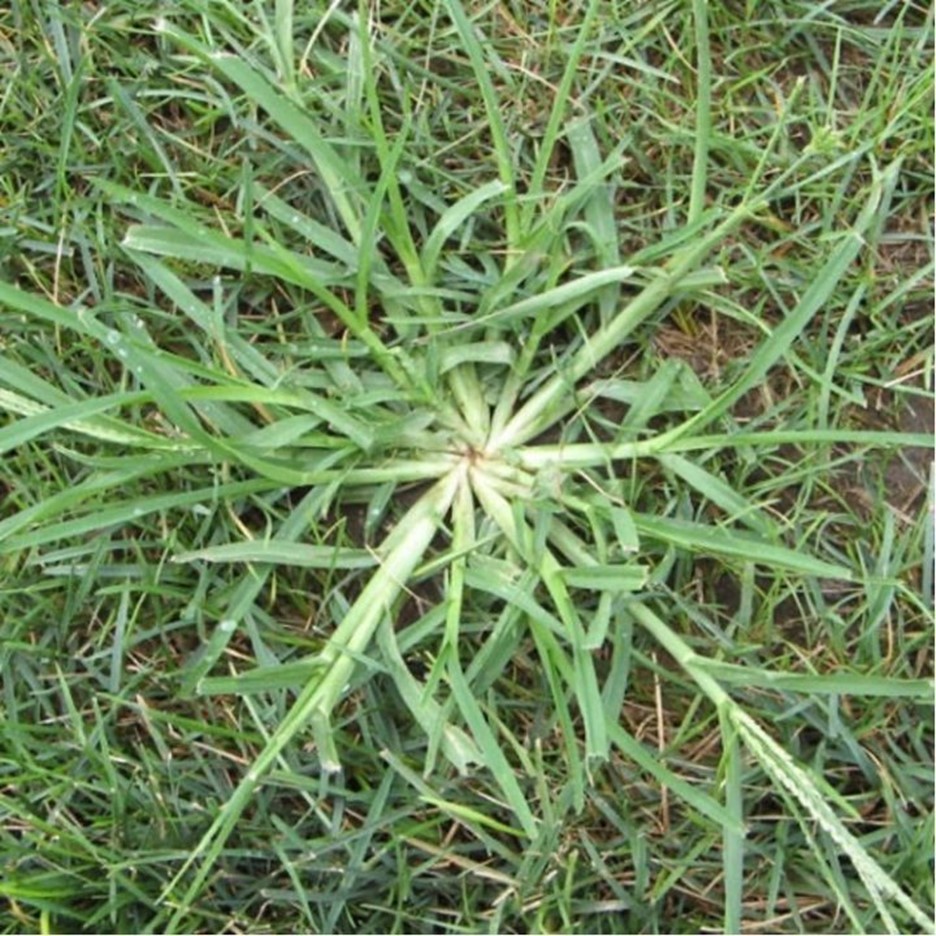
To control goosegrass, compaction management is essential. It thrives in compact soil so you should consider aerating the area to allow for other grasses to succeed. Try to remove these by hand (probably using a screwdriver) before they produce seeds. Otherwise, you will want to use a consistent program that combines preemergents and spot treatments.
5. Horseherb (Calyptocarpus vialis)
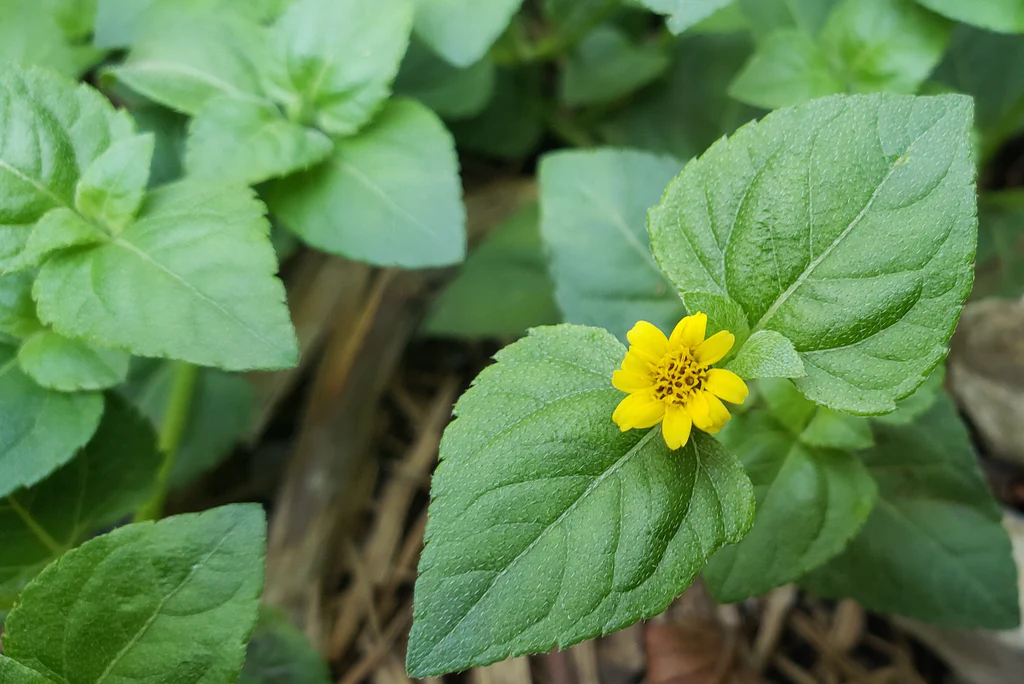
Horseherb (aka straggler daisy) is a shade tolerant ground cover that often takes over areas without enough light for other turf grasses to thrive. Some people love this plant. Some people love to hate it. It has become somewhat of crowd favorite for native plant advocates and you can even buy it at certain nurseries. It can even attract butterflies…but beware…it can take over a yard quickly.
To control horseherb, you have to either thoroughly handpull the plant or control it with a weed program. It has deep and hardy roots so it is a challenge to beat. It is also difficult to replace because it does so well in shaded areas where most other plants can’t survive.
6. Nutsedge (Cyperus spp.)

Nutsedge looks like grass, but it isn’t. Roll a stem between your fingers and you’ll feel three edges (grass stems are round or flat). It’s shinier and lighter green than your lawn and grows faster, so it pokes up above the grass a couple of days after you mow.
To control nutsedge, you can use a herbicide that targets the plant without harming your grass. It’s best to apply herbicide in the summer when the plant is actively growing.
Don’t try to pull it. The little nutlets underground break off and come right back.
What about fall?
Good news: summer weeds like crabgrass and sandbur die back once the first cold snap hits. Bad news: the seeds they dropped are sitting there waiting for spring.
Fall is also when winter weeds show up, like henbit and chickweed. A fall pre-emergent (September through October) helps keep them out, and a spring pre-emergent (late February) handles the summer crew.
Translation: weed control isn’t one-and-done. It’s a timing game.
Weeds are never really “done.” But you can stay ahead of them.
- In your lawn? Our Fertilization and Weed Control program.
- In your beds? Our Beds and Shrubs service.
- Want it handled your way? Our hourly program lets you set a dollar cap and give us instructions.
Call us at (512) 291-7050 and we’ll get you on the schedule. And whatever you do, read and follow the label on any herbicide you use… and wear gloves.